
Book
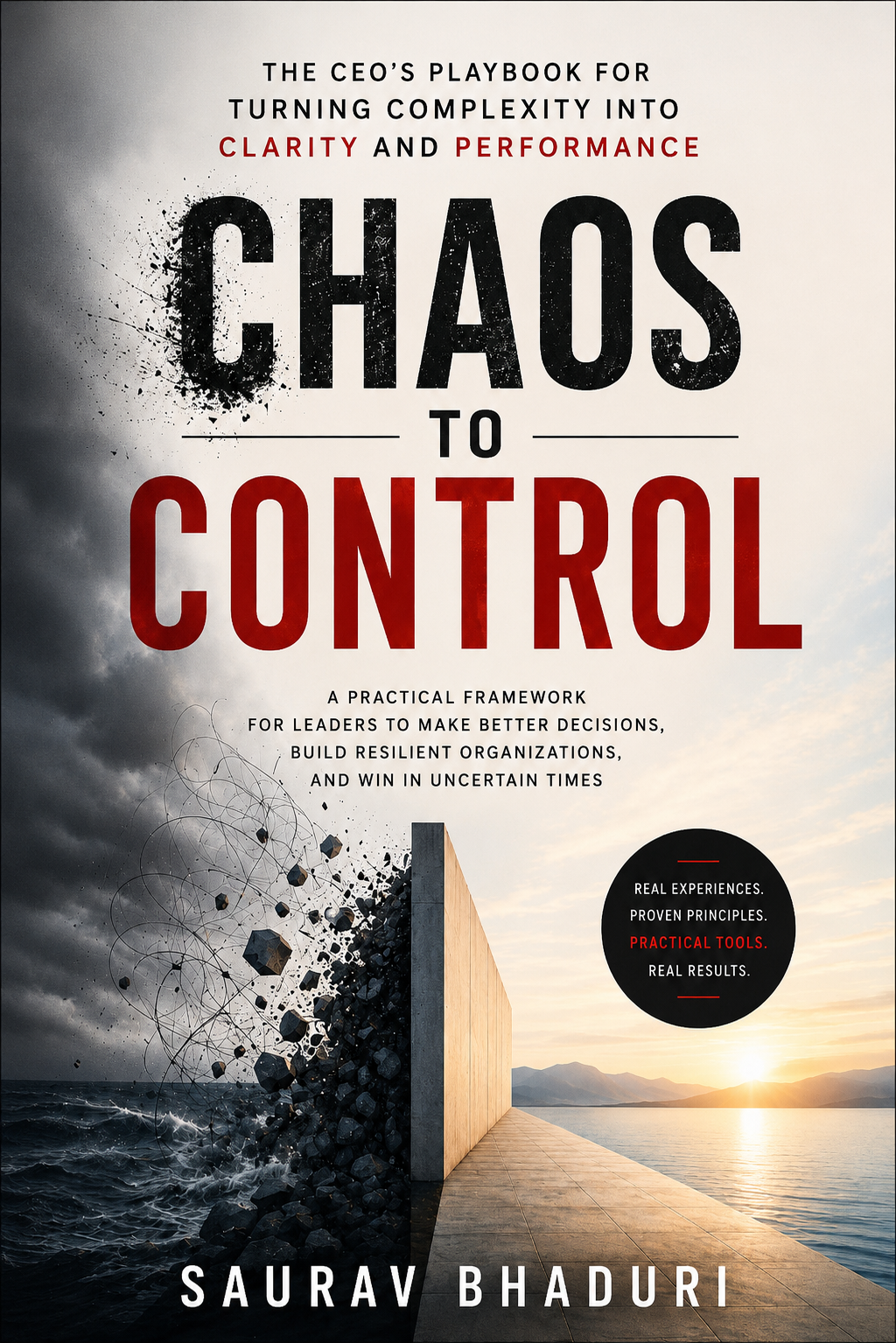
Chaos to Control
How Growing Companies Become Hard to Run — and How Great Leaders Fix Them
Forthcoming
Chaos to Control
How Growing Companies Become Hard to Run — and How Great Leaders Fix Them
Why do successful companies become harder to run as they grow? Chaos to Control examines what happens when ownership blurs, information becomes unreliable, managers carry responsibility without authority, and the CEO becomes the operating system.
It offers a practical path from reactive leadership to proactive management through clearer outcomes, decision rights, operating rhythms, reliable information and behavioral boundaries.
The Argument
Growth creates complexity. Leadership turns it into scale.
Growth itself is not the problem. The problem is continuing to run a larger, more connected company with the management habits of a smaller one. As organizations grow, the number of decisions, interfaces and exceptions increases faster than the management system evolves. What once worked through informal coordination now requires deliberate architecture.
The book is not a critique of growth. It is a field guide for the operating work that growth demands — the unglamorous, essential discipline of making direction visible in what leaders decide, fund, stop, review and hold accountable.
Structure
The arc of the book.
Why Growth Makes Companies Harder to Run
The structural reasons successful organizations become slower, more political and more dependent as they scale.
Where Execution Breaks Down
The interfaces between strategy and operations, authority and accountability, data and judgment where ambition is quietly lost.
Rebuilding the Operating System
Clearer outcomes, decision rights, management rhythms, reliable information and behavioral boundaries as deliberate architecture.
From Reactive to Proactive Leadership
How leaders move from rescuing the company personally to building the capacity for it to execute without them.
Recurring Themes
What the book returns to.
Readers
Who the book is for.
Chaos to Control is written for leaders who are living inside the problem: CEOs, founders, executives and board members who have watched a company they built or run become harder to manage as it has grown, and who are looking for practical disciplines rather than frameworks divorced from operating reality.
It is also for senior managers who carry responsibility without authority, who see the cost of ambiguity firsthand, and who want to understand the system above and around them more clearly.
The goal is not a more impressive strategy document. It is an organization that can see reality, make sound decisions and execute with discipline.
Chaos to Control is a practical account of why successful companies become harder to run — and what leaders can do about it.